Thursday, October 16, 2008

Why Limit Water to Drinking?


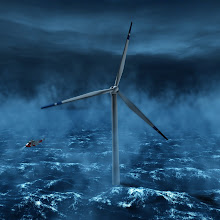
Without water, life would never be able to exist on Earth. Water does not have to be limited to that role, though. Dams installed in rivers can be used to generate hydropower, which is electricity generated from the kinetic energy of water. Hydropower generates twenty percent of the world's electricity, and is responsible for ninety-seven percent of electricity generated from renewable energy sources. Hydropower is so relatively prevalent, Norway uses hydropower to generate ninety-nine percent of its electricity. Hydropower, however, because of its dependence on dams, can only be harvested in rivers, and this form of electric generation fails to harvest the heat inherent in some water.

A relatively new method of harvesting water-based energy, called Ocean Thermal Energy Conversion, or OTEC, promises to harvest this energy. In fact, the energy in the world's oceans is so bountiful that only one-tenth of a percent of this energy could provide twenty times the energy consumed by the United States. The only requirement for an OTEC system is a difference of 20 degrees Celsius between the temperature of the surface water and the temperature of the water deep below the surface. Despite the promise of OTEC, the world has not yet financed a permanent OTEC plant. Still, OTEC is inspiring for some futurists, having proposed using OTEC to power conceptual underwater hotels and floating cities. Unlike hydropower, OTEC is not yet being used, but may hold much more potential. In fact, hydropower and OTEC could let humanity expand if the technology is advanced, and, combined with other renewable energy sources, will provide untold amounts of power for the world and eliminate the dependence of fossil fuels.

P.S.: Here is a video on OTEC from Youtube.

The Implications of Ignorance

High oil and gas prices have undoubtedly accelerated the quest for renewable energy. These prices may carry economic consequences if renewable energy is left relatively undeveloped, but more dangerous, possibly permanent, effects may accompany those consequences. Currently, as I noted in "The Earth, Energy, and Politics," most energy demand is satisfied by fossil fuels. Fossil fuels are limited, as well as virtually non-renewable, allowing the fuel to be depleted. A depletion of fossil fuels would have several harmful effects, such as the elimination of conveniences such as the computer and television. These two technologies are completely integrated into the foundation of society, and suddenly removing those technologies would shatter the social network.

The shattering of society, however, is pale in comparison to the potentially massive effects of global warming, resulting from the combustion of fossil fuels. Because of the resulting temperature increase, the polar ice caps, which support many lifeforms, will likely melt. The new lack of ice, supposedly, would allow the Earth to absorb more sunlight, further increasing the Earth's temperature. In addition to the harm this melting would inflict on species depending on polar regions, global warming can also impact humanity as well, but those effects are not as clear. As an illustration, global warming could increase the risk of catching various diseases. However, even with global warming, puzzlingly, the number of heat-related deaths has declined. Similarly, global warming can dehydrate some crops, but can also extend the growing season for some regions. Since biofuels, which I elaborated on earlier, are plant-based, global warming would impact the resource. In fact, other renewable energy sources, like solar and wind power, could also be impacted by changes in cloud cover and wind speed, respectively.

These theories may be true or false, but very few of these theories provide any scientific data, aside from carbon dioxide and temperature measurements. Without any data, the effects of global warming remain unforeseen, but these effects will certainly be enormous. Combined with the consequences of the depletion of fossil fuels, not pursuing renewable energy would carry extreme risks. The world understands these risks, but because of partisan bickering, the world has stalled in its work to explore renewable energy. If humanity does not unite on this issue, then, in the future, the Earth may be vastly altered, and humanity may never recover.

Tuesday, October 14, 2008

Nationalizing the Banks

I won't talk about energy. I will talk about the nationalization of banks. This move is huge. Nine big banks have $125 billion dollars. Bush wants $100 billion more. This move may be good or bad. Years ago, the government bought 80% of an Illinois bank. Our government lost $1 billion. Europe is performing this too. Yesterday, Europe risked $2.3 trillion dollars, and this money may not be enough. Democrats want $150 billion for later use. Everyone is complaining about this spending. Eunomia does not like the plan, and Paul Krugman does not like the management. It seems that everyone does not like the plan. President Bush is a bad President, and the plan has had difficulties. I think the plan is nice, though.

Sunday, October 12, 2008

Some Great Election Blogs

Renewable energy is an important issue in this election, but renewable energy is not the only issue worth discussing. Nobody can decide which Presidential candidate to support by comparing the candidates' stances on only one issue, so I selected three links to blogs that deal with other issues. There were many blogs to choose from, and I cannot display all of them, but choosing three blogs from the entire collection was very difficult. You are welcome to explore other blogs that deal with issues, but I will show why you should visit these three blogs in particular, so I recommend that you visit these blogs first.

The Issue On Taxes
by IGetNoSleep

Taxes are an important issue in the election, and, as IGetNoSleep has mentioned, are important in the Presidential Debates. There are analyses of these debates with respect to taxes, along with a plethora of information and links in one post. Recently, there was a post outlining an intriguing type of tax, but that post stands alone in its intrigue. However, IGetNoSleep posts earlier than the authors of other blogs dealing with election issues while maintaining an equivalent or higher level of post quality. If that speediness is insufficient, as of this post, the entire Vice Presidential Debate can be watched or read without interruption. In fact, the only reason not to look at this blog is an insignificant error in described post publication, as posts usually are published on Tuesdays or Fridays, not Tuesdays and Sundays. This error, though, can be easily repaired, and since taxes are discussed frequently, you would be wise to educate yourself with the information shown in this blog.

Apparently Money Doesn't Grow On Trees by Britney

This blog focuses on the economy, and, unsurprisingly, has some focus on the bailout plan. This blog, though, also has briefly outlined the less obvious declines in the global market. As of this post, the connection between the global markets has not yet been explored, but the post mentioning that fact was quite recent, and Britney counteracts this small gap by providing consistently large amounts of information in each post, and these posts may contain the most well-blended information in the blogs I looked at. There are also figures and a video on the economy to look at if you do not feel like reading Britney's posts. There is also a sidebar filled with the latest economical news, only adding to the saturation of information in the blog. In fact, given the obscurity of the global market on television, you may learn more about the economy from this blog than from the mainstream media.

Foreign Policy In Regards To Colombia by St3Vzla

Perhaps the most intriguing of all the blogs, this blog focuses on the issue of drug policy, particularly with respect to Colombia. The author, despite the little or no amount of coverage of this issue in the news, managed to collect a surplus of knowledge for one post. Many of the other posts, though, lack that large concentration of information, nor is there any news bar or similar extra addition, but the huge concentration of information is less than what can be found by researching other issues. Despite the difficulties in researching this topic, St3Vzla has maintained great variety in the posts so far, making this blog a nice blog to see one of several issues buried among the many other issues of this election.

Friday, October 10, 2008

A Theory on Political Inaction

Barack Obama and John McCain, as I mentioned in "The Earth, Energy, and Politics," are, in their proposed energy policies, virtually in agreement on renewable energy. The two candidates, though, have demonstrated major disagreements on energy with their votes as Senators since 2005. Their votes show the massive division between the candidates, but the Senate is not always as divided as the two candidates. In fact, most of the one hundred Senators seem to decisively vote for any bill focusing exclusively on renewable energy. However, bills that have any major reference to oil drilling or oil companies appear to divide the Senate, even if those bills focused on renewable energy. No matter why some Senators vote differently because of references to oil in those bills, fossil fuels clearly have a profound impact on politics. If the government was able to negate the influence of fossil fuels on politics, then the United States could make much faster progress on renewable energy.

The issue of renewable energy, however, is not just a domestic issue, but also an international issue. Internationally, however, the focus on renewable energy has been driven by global warming, which has sometimes divided the international community. Two international protocols highlight this division - the Montreal Protocol and the Kyoto Protocol. The Montreal Protocol was formed to protect the ozone layer by eliminating ozone-depleting substances, and is often advertised as a symbol of international cooperation. This protocol was successful because of its scientific certainty, as the depletion of the ozone layer would have drastic consequences for life on Earth, since cancerous ultraviolet light would then be able to penetrate the atmosphere. The Kyoto Protocol, in contrast, was formulated to combat climate change by reducing the emissions of six greenhouse gases, including carbon dioxide. Most countries have signed on to and ratified the Kyoto Protocol, but the United States has not. In fact, the United States Senate unanimously passed a bill called the Byrd-Hagel Resolution that essentially prohibited the United States from entering the Kyoto Protocol. America's rejection of the Kyoto Protocol is symbolic, not only because of its lone standing on the protocol, but also because of the universal agreement in the Senate on the opposition to the protocol. The United States did not reject the Kyoto Protocol because of a lack of scientific specificity, but climate change cannot be easily predicted. An increase in greenhouse gas concentrations will increase the Earth's temperature, but the resulting effects are completely variable, unlike the certain effects that would result from the depletion of the ozone layer. Without any certain prediction on global warming, many corporation likely remain skeptical, including oil companies. If scientists could retrieve more data on global warming, then all doubts would be erased, and the entire world would cooperate on global warming, not just America. The United States is important, but only the entire international community can stop global warming and keep the Earth in good condition, not only for the population, but also for future generations that will follow.

Thursday, October 9, 2008

Can the Earth Power the World?


One of the Earth's main components is magma, and is often seen in its surface form of lava when launched out of a volcano. Magma, unsurprisingly, is extremely hot, and therefore, energetic. Given the dominance of magma in the Earth, its geothermal energy promises to be vast and plentiful. This bounty, however, is difficult to access, and can, currently, be only harvested in mass quantities through geothermal systems, which are places where the Earth's heat flow is shallow enough to pump the water required for energy transfer to the surface. Despite these limitations, geothermal energy remains viable as a major competitor. In fact, volcanoes and hot springs in the United States could potentially provide twenty-five percent of America's needed power. Additionally, up to eighty percent of America's geothermal systems may remain undiscovered, largely because of a supposed lack of defining surface features. If this estimate is true, then geothermal energy could easily power the entire United States and America would still retain an energy excess. The power of geothermal energy, though, is most strongly demonstrated in Iceland. Iceland may have a population of only three hundred and ten thousand people, but the country's twenty active volcanoes provide a pool of geothermal energy. Iceland has only harvested one percent of its geothermal potential, and the country already uses that small chunk of energy to heat eighty-five percent of the country's homes and generate eighteen percent of the country's electricity. Now, if Iceland harvested all of its geothermal potential, then the country's power consumption would be almost insignificant compared to its energy production.

This power source may be unlimited, but geothermal energy still has one drawback - waste production. Some geothermal plants emit carbon dioxide, a well-known greenhouse gas that contributes to global warming, although the newest geothermal plants, called binary plants, emit virtually no carbon dioxide at all. Some geothermal plants also produce a solid-like sludge byproduct, and while a portion of the sludge can be sold, most of the waste is disposed of at specific sites. Despite this disadvantage, though, the environmental impacts geothermal energy creates are much lower than those of fossil fuels, all with low prices for geothermal energy. In fact, geothermal energy costs only three to three and a half cents per kilowatt-hour, while energy derived from an average power plant dependent on fossil fuels costs five cents per kilowatt-hour, which gives an incentive to transition to this renewable energy source.

Overall, geothermal energy has great promise, not only because of the vast potential energy for harvesting, but also because of the costs of producing this energy and the environmentally friendly technology available. Even with the relatively advanced technology required to produce geothermal energy, the cost of that energy is lower than that of fossil fuels. Additionally, geothermal energy could avoid contributing to global warming if all geothermal power plants advanced to the latest technology, thereby avoiding any of the unforeseen consequences that could potentially follow. If the world does transition to renewable energy, then I think that geothermal energy will provide a significant portion of the world's power consumption. That consumption may increase in the upcoming years, but with the surplus of energy at the world's disposal, humanity should have no problems in that area.

Tuesday, October 7, 2008

Biofuels: Renewable, but Clean?

Because most cars currently run on tangible fuels, many supporters of renewable energy have advertised biofuels, which are fuels generally created from plants. Since plants can reproduce to grow more plants, the supply of potential biofuels is virtually unlimited. The most familiar biofuel is ethanol, an alcohol that is mostly produced from corn sugars. Plants, however, are carbon-based, and this also applies for ethanol, meaning that carbon dioxide, a greenhouse gas, will still be produced when ethanol is burned. However, ethanol can cut greenhouse gas emissions by up to twenty percent, and an energy law passed last year demands a fourfold increase in ethanol production by 2022. Ethanol, though, still requires at least 15% gasoline for effective burning, has only two-thirds the energy content of gasoline, and may increase smog concentrations in urban areas. Despite these drawbacks, ethanol is blended into approximately sixty percent of gasoline, and eighteen percent of the corn in the United States was used to make ethanol last year, with the energy law making continued growth of that figure almost certain. In fact, one hundred and thirty-four ethanol power plants are currently operational in twenty-six states, and seventy-seven additional ethanol power plants are under construction. However, the intense consumption of American corn, which will only increase from these new power plants, has driven corn prices to records or near-records. A new type of ethanol, called cellulosic ethanol, now promises to erase many of ethanol's weaknesses, but faces technological hurdles in mass-production. Cellulosic ethanol does not require corn for production, could generate more energy than gasoline, and would also lower greenhouse gas emissions. This new form of ethanol may still impact global warming, but may keep global warming at bay long enough to develop other renewable energy sources.

Ethanol may be the best known biofuel, but there is another type of biofuel - biodiesel. Biodiesel, as the name suggests, is a diesel alternative, but is mostly made from soybeans and oils, particularly used cooking oil. Given the prevalence of cooking oils in restaurant and fast-food chains, this fuel type is appealing, but suffers from a few difficulties. Biodiesel may contain a higher energy content than gasoline, but has a lower energy content than regular diesel. Furthermore, biodiesel may also reduce greenhouse gas emissions, but the fuel may increase pollutant levels. Finally, biodiesel can damage cars at low temperatures. Biodiesel may be renewable, but the fuel offers very few benefits, and will likely never be distributed on a large scale.

Corn, soybeans, and oils are generally thought to be the major contributors to biofuel supplies. Many other fuel sources, though, can be used for biofuel production. Poppies, for instance, can be used to create biodiesel, and a power plant in Tasmania, Australia is already operational. Kudzu, the most invasive plant in the United States, could be used to generate two hundred and seventy gallons of ethanol per acre of kudzu, a comparable figure to corn's productivity of three hundred and thirty gallons per acre. Algae, another unknown biofuel source, in contrast, can produce ten thousand gallons of ethanol per acre. In fact, the first algae power plant, located in Texas, opened in April of this year, despite the incredible cost of twenty dollars per gallon for ethanol created by algae. The most intriguing source of ethanol, however, is not a plant, but instead, garbage. In fact, in a week, the garbage New York City disposes of could be used to fill the gas tanks of seven hundred and fifty thousand vehicles that can burn ethanol, and the United States and Canada have already approved power plants that process garbage. These discoveries are very intriguing, and some of these biofuel sources may even power a part of the world for a time.

Biofuels, however, still suffer from their fundamental flaw - their impact on the environment. No matter how innovative many of the discoveries regarding biofuels are, biofuels still contribute to global warming with carbon dioxide. Ethanol may serve as a temporary fuel for the world until the world can adapt to other renewable energy sources, but because of ethanol's contributions to global warming, the fuel cannot be permanent. Many renewable energy sources do not contribute to global warming, and society should pursue these to keep the Earth safe.